
Waste management plans
Plan for waste storage and collection before the layout is settled.
Green Analytics prepares operational development waste management plans and construction and demolition waste management plans. Your written plan includes waste estimates and recommendations for storage and collection, tailored to the project.
Which part of the project does your plan cover?
A waste management plan for an occupied building addresses a different task from a plan for building works. Use the requirement you have received to identify the assignment before comparing proposals.
Operational development plans
This concerns the waste generated when people live or work in the completed development. The practical questions include what waste needs separating, where bins will be stored, how people reach them and how collection will work.
Demolition and construction plans
This concerns materials and waste during demolition or building works: opportunities for reuse and recycling, on-site separation and storage, and removal arrangements. These needs change with the works and site logistics.
For example, consider a project replacing an existing building with apartments. Handling materials from demolition and providing residents with an ongoing bin storage and collection system are separate planning tasks. The appointment needs to say which task it covers.
What needs to work in the design?
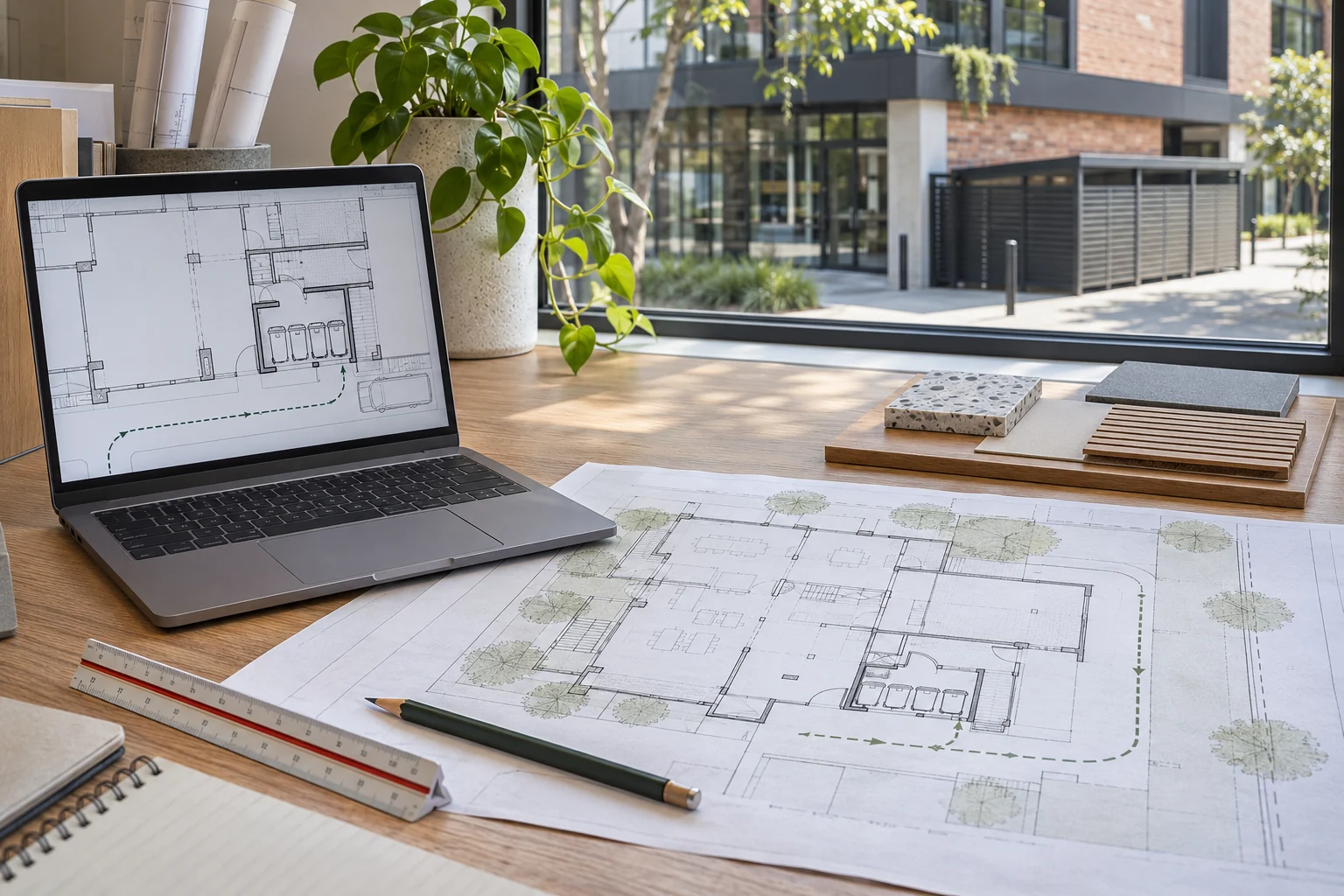
For an operational plan, follow the waste from the point where it is generated to the collection point. This helps turn a general request for a report into specific design questions:
- Waste and recycling: which streams need space, and what is the basis for estimating their volumes?
- Storage: where will bins sit between collections, and can people reach and move them?
- Collection: where will bins be emptied, and how will the collector reach that location?
- Management: who will move bins, keep the storage area usable and provide instructions to occupants?
Whitehorse City Council's guidance, for example, considers generation, bin sizes, storage locations and collection access. These are useful starting questions; the requirements for your site need to be checked with the relevant council.
Keep the report and drawings aligned. A written collection arrangement needs to match the space and access shown on the design, rather than rely on a location that has since moved.
What your plan includes
The Green Analytics service provides a written waste management plan with:
- Waste estimates for the project.
- Recommendations for waste storage.
- A collection strategy suited to the proposed development or works.
The plan brings the estimates and recommendations together in a project-specific document. Identify the plan's purpose, the drawings it relates to and any council request when briefing the work.
Agree any additional work
A written plan and recommendations do not, by themselves, define every drawing or specialist assessment the project needs. Confirm these items in the appointment:
- Drawings: who supplies the base plans and whether waste layouts or to-scale bin-room drawings are included.
- Vehicle access: whether separate access or swept-path work is needed to assess a collection vehicle's turning movements.
- Specialist tasks: any hazardous waste or other specialist advice required.
- Coordination and revisions: responsibility for council questions, collection-provider liaison and changes to the design or brief.
These details allow the written plan and any supporting work to be scoped together, with responsibilities clear from the start.
Useful information for your enquiry
You can start with the information already available. Describe anything still being developed so the enquiry reflects the project's actual stage.
- Site address and council area.
- Proposed use and scale, such as dwelling numbers or commercial floor area.
- Project stage and whether the enquiry is about operation, demolition or construction.
- The council request, permit condition or other brief you need to address, if available.
- Available site and floor plans, with their revision or date.
- Any proposed bin store, collection point or collection arrangement.
- A relevant submission date, if one has been set.
If you already have a waste management plan, mention it and explain what has changed or what feedback needs a response. There is no need to describe a settled design when decisions remain open.
Define the brief and review the output
Use the project brief to connect the requirement, the design and the document being prepared. Work through these points when discussing the appointment and reviewing the plan.
- Define the assignment
Identify the project phase, document purpose and applicable site requirements. Agree the deliverable and the responsibilities of the project team. - Establish the basis
Identify the drawings and project information to use. Record missing information and assumptions that need agreement before relying on the output. - Resolve the arrangements
Work through the storage and collection approach with the relevant design information. Identify any access or specialist question that needs another contributor. - Review and coordinate
Check the report against the drawings and the agreed brief. Establish who will address comments and how later changes will be managed.
Record the agreed work, review responsibilities and revision arrangements in the appointment. This keeps additional requests and later design changes visible.
Questions before you commission a plan
Can I use a council template?
A template may be a suitable starting route where the council provides one for your type of project. Moonee Valley City Council, for example, directs applicants to guidance, a checklist and a template to help prepare a plan. Check the relevant council's current instructions and whether your project needs additional information or a particular professional role.
Does a construction management plan cover the same work?
Check the requested documents. A construction management plan can cover wider site issues: Kingston's guidance includes traffic, noise, dust, stormwater and waste. Establish whether the waste component is sufficient for the requirement you have received or whether a separate waste management plan is needed.
How are bin numbers and storage space determined?
Start with the development's use, the waste streams and the relevant council's calculation basis. Collection frequency also affects the storage arrangement. Moonee Valley's 2025 guidance, for example, specifies local generation estimates and requires scaled storage drawings. A bin count taken from another project's report is not a site-specific design basis.
What happens if the design changes?
Tell the plan preparer which drawings have changed and why. Ask whether the change affects the plan, calculations or collection arrangement and whether further review is included in the appointment. Confirm any council requirements before altering an endorsed arrangement.
Does a completed plan guarantee council approval?
Council assesses the submission for the relevant project. Treat the plan as part of that process and allow for questions or revisions. Agree who will coordinate any response and what that support includes.
Discuss your waste management plan
Tell Green Analytics the site address, proposed use, project phase and requirement you need to address. Mention the drawings available and any council feedback so your enquiry starts with the assignment that matters.